
In August Franklin will vote on a “police” millage, but it this really for the police or is it creating a slush fund for pet projects and continued finacial mismanagement?
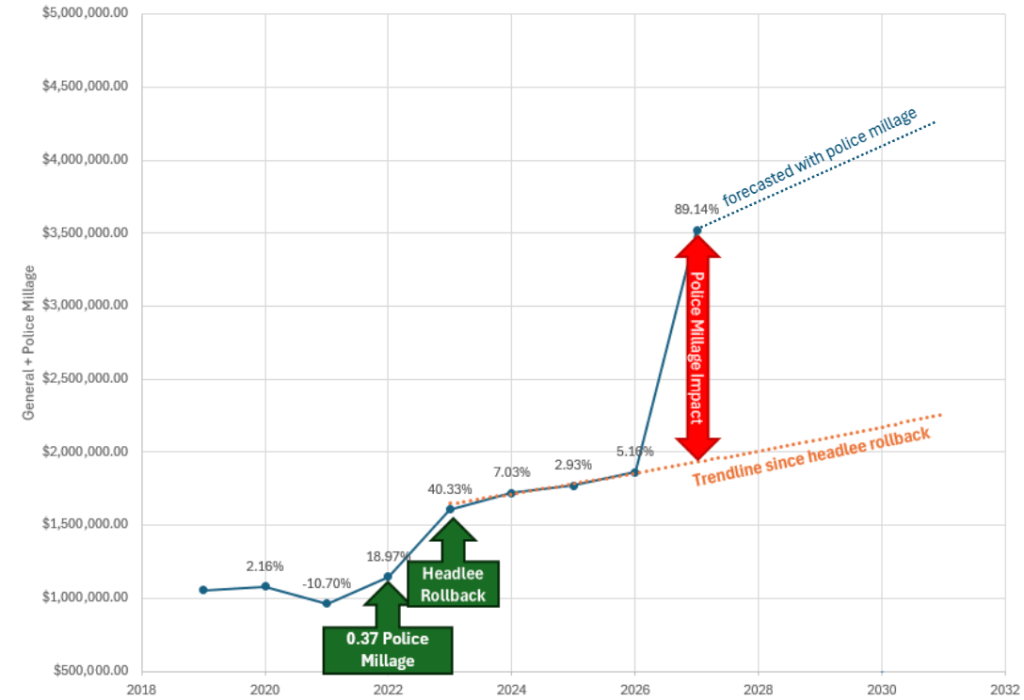
The plot above shows massive spending increases exceeding inflation since 2022. The trendline for this without any added millages and with Headlee reductions in millages maintains a steady increase above the rate of inflation and above 5%. With the police millage this explodes generating a 1.8 million yearly surplus and costing the average home about $1,400 per year.

Analysis
- Police are fully funded in both situations
- 410k dollar general fund surplus today explodes to 1.8 million dollars
- Police move from fully funded to a 5% surplus
Misinformation and Scare Tactics
Ex-trustees along with the police force are pushing the yes vote through scare tactics and misinformation like below
- Franklin is in a budget deficit
- General fund can no longer support police operations
- Without the millage we will lose the local police
- Current level can’t be met without increased funds
- Franklin will have to rely on an outside department with reduced service
With a $410k surplus, these are just scare tactics. We’re seeing ongoing tax increases beyond 2030 as taxable values rise to the state equalized value. This is a straightforward budget issue that can be handled by controlling expenses, with no need to nearly double village taxes.
Areas for Improvement
SAD Funding
Franklin and Bingham Farms both use the same police services, but Franklin’s costs are rising faster than Bingham’s, particularly for the Special Assessment District (SAD). Why are residents’ taxes increasing so much quicker than businesses in the SAD?
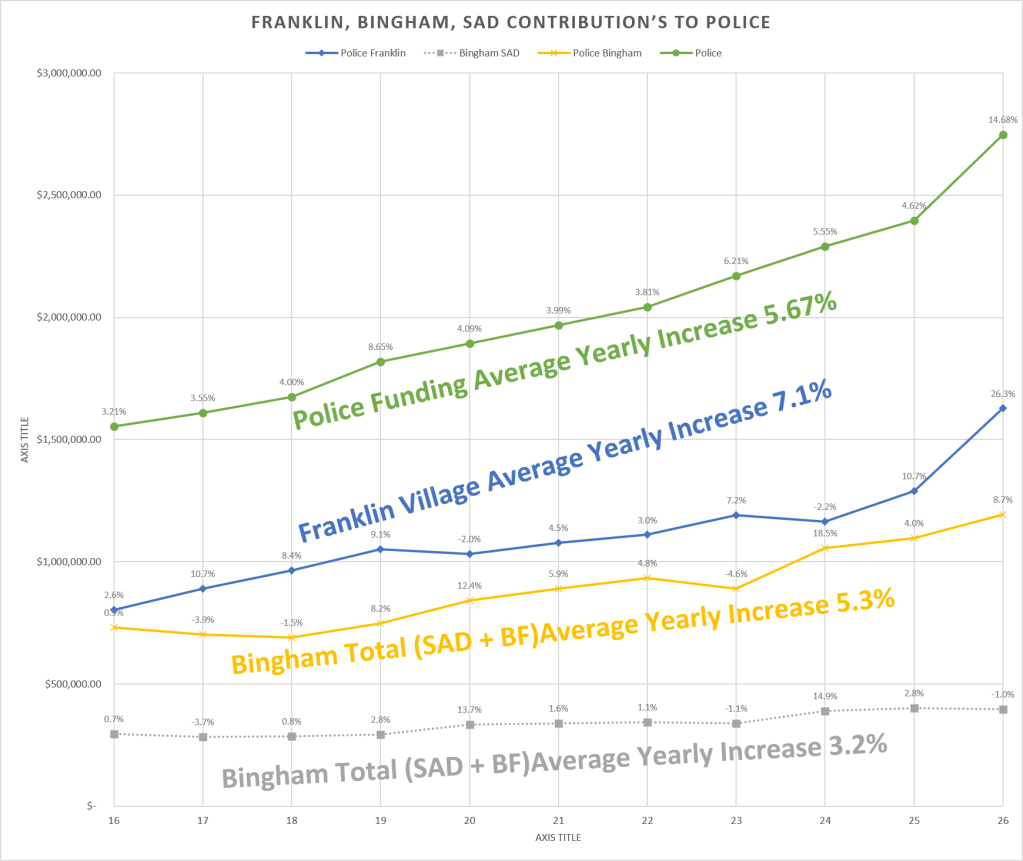
Keeping SAD in pace and maintaining that rate would help make it fairer and lessen the burden on Franklin taxpayers.
Eliminate Reckless Spending
Do not make decisions without understanding the consequences. For instance, two flock cameras were added without proper consideration. These subscription-based cameras cost $6,000 a year, which equals the village taxes of four households. This expense is clearly not justified and shows a lack of responsibility in a “budget crisis.”

